English version (machine translated) follows below.
Carnevale: riflessioni fra maschere, Bacco e Venere
Dopo anni di assenza, la settimana scorsa mi sono ritrovata di nuovo in mezzo alle sfilate di Carnevale. Non per inseguire la nostalgia, ma per accompagnare mia figlia, festante fra il tulle delle principesse, i mantelli di Harry Potter e un esercito di mini-supereroi colorati. Intorno a lei, coriandoli che piovevano come piccole benedizioni di gioco e libertà.
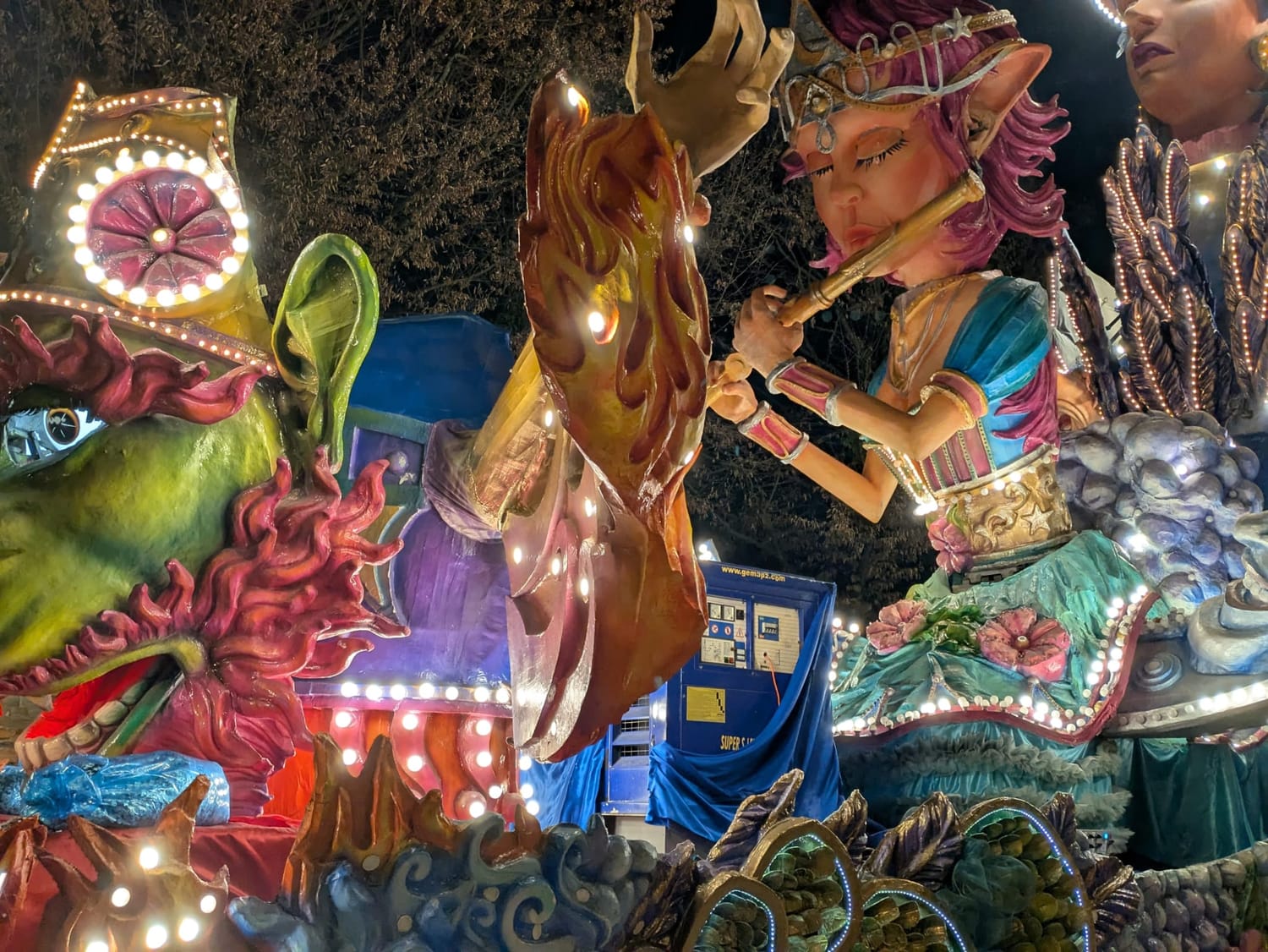
Poi sono arrivati i carri. La musica si è fatta così potente da far vibrare i bassi nello stomaco, e insieme a quel ritmo ho sentito tornare tutta la forza del Carnevale: uno spettacolo di ironia, paura e desiderio mescolati sotto la luce dei riflettori. C’era un carro con Caronte, traghettatore delle anime. Un altro con un robot che ricordava il film con Will Smith e mi ha fatto pensare all’incombere su di noi di alcuni aspetti non chiari dell’intelligenza artificiale, tra luci al neon e volti digitali. Poi un altro con Fate, donne, e flauti.
E davanti a ciascun carro gruppi di ballerini che sicuramente avevano già incontrato Bacco e speravano di incontrare Venere piu’ tardi – con cui ci siamo trovati a ballare su ritmi elettronici.
Guardandoli, ho pensato che il Carnevale continua a essere lo specchio delle nostre tensioni più profonde. I carri non sono solo fantasia o satira: rappresentano in modo comico o grottesco ciò che l’uomo teme e ciò a cui aspira. Ci lasciano esorcizzare le nostre paure e ridere dei nostri eccessi.
Come ogni rito che resiste al tempo, anche il Carnevale racconta qualcosa del nostro bisogno di significato. È l’ultima follia prima dell’attesa, del silenzio della riflessione. Una forma di libertà che ci consente di guardare in faccia il caos, danzandoci intorno.
Lenny Bruce fu un comico americano, che viene da molti considerato “il pioniere della stand up comedy”. Negli anni 50/60 Lenny parlava di quotidianità senza alcun tipo di filtro, costruendo brani di satira che erano spesso nell’occhio del ciclone – usando espressioni dirette, troppo dirette che sul palco non si erano mai visti. Spesso cacciato dal palco, arrestato e anche imprigionato. Finisco questo articolo con una sua frase. “La risata uccide la paura, e senza paura non c'è più bisogno del controllo”.
"Semel in anno licet insanire" ("Una volta all'anno è lecito impazzire").
Carnival: Reflections Among Masks, Bacchus, and Venus
After years of absence, last week I found myself back in the middle of Carnival parades. Not chasing nostalgia, but to accompany my daughter, joyful among princess tulle, Harry Potter capes, and an army of mini-superheroes in bright colors. Around her, confetti raining down like little blessings of play and freedom.
Then the floats arrived. The music became so powerful it made the bass vibrate in my stomach, and with that rhythm I felt the full force of Carnival return: a spectacle of irony, fear, and desire mixed under the spotlight. There was a float with Charon, the ferryman of souls. Another with a robot reminiscent of the Will Smith movie, making me think of the looming unclear aspects of artificial intelligence over us, amid neon lights and digital faces. Then another with Fates, women, and flutes.
And in front of each float, groups of dancers who had surely already met Bacchus and hoped to meet Venus later—with whom we ended up dancing to electronic rhythms.
Watching them, I thought that Carnival continues to be the mirror of our deepest tensions. The floats are not just fantasy or satire: they comically or grotesquely represent what man fears and aspires to. They allow us to exorcise our fears and laugh at our excesses.
Like every rite that withstands time, Carnival also tells something about our need for meaning. It's the last madness before the wait, the silence of reflection. A form of freedom that lets us face chaos, dancing around it.
Lenny Bruce was an American comedian, considered by many as "the pioneer of stand-up comedy." In the 50s/60s, Lenny spoke of everyday life without any filter, building satire pieces that were often in the eye of the storm—using direct expressions, too direct, never seen on stage before. Often kicked off stage, arrested, and even imprisoned. I end this article with one of his quotes: "Laughter kills fear, and without fear there's no more need for control."
"Semel in anno licet insanire" ("Once a year it is permissible to go mad").
Cosa ti fa venire in mente questo post?
YOU MIGHT ALSO LIKE
Ti incuriosiscono i bias cognitivi? Scarica la mia guida gratuita e scopri i piccoli sabotatori delle tue decisioni. Non mi devi neanche lasciare la tua mail, tranquill*
Privacy policy: https://www.iubenda.com/privacy-policy/31240018
Cookie Policy: https://www.iubenda.com/privacy-policy/31240018/cookie-policy
Creato con ©systeme.io