
English version (machine translated) follows below.
“Grazie, le faremo sapere” e poi scompaiono. (Una riflessione ironica con la Finestra di Johari)
Un po’ di tempo fa, con L. – brillante manager e ottima compagna di chiacchiere - abbiamo avuto un’idea lavorativa che avrebbe messo insieme le sue e le mie competenze. Mettiamo a punto una presentazione, ci ragioniamo su per bene, immaginiamo anche una fase di “test” in cui non avremmo chiesto un esborso economico al primo cliente, proprio per affinare meglio questo servizio. Quando siamo state pronte, siamo partite. Tre presentazioni, tre momenti distinti, tutte sembravano andare bene, tutte avevano suscitato curiosità e interesse. Ci avevano detto: “Ci ragioniamo e vi richiameremo”, e io avevo già immaginato il successo. Poi… puff! Tutte e tre sono scomparsi nel nulla, come se si fossero volatilizzati. Ovviamente, mi sono chiesta: perché? Quale mistero circonda questa sparizione in zona “ci pensiamo” e perché, invece di rassicurare, diventa un buco nero?
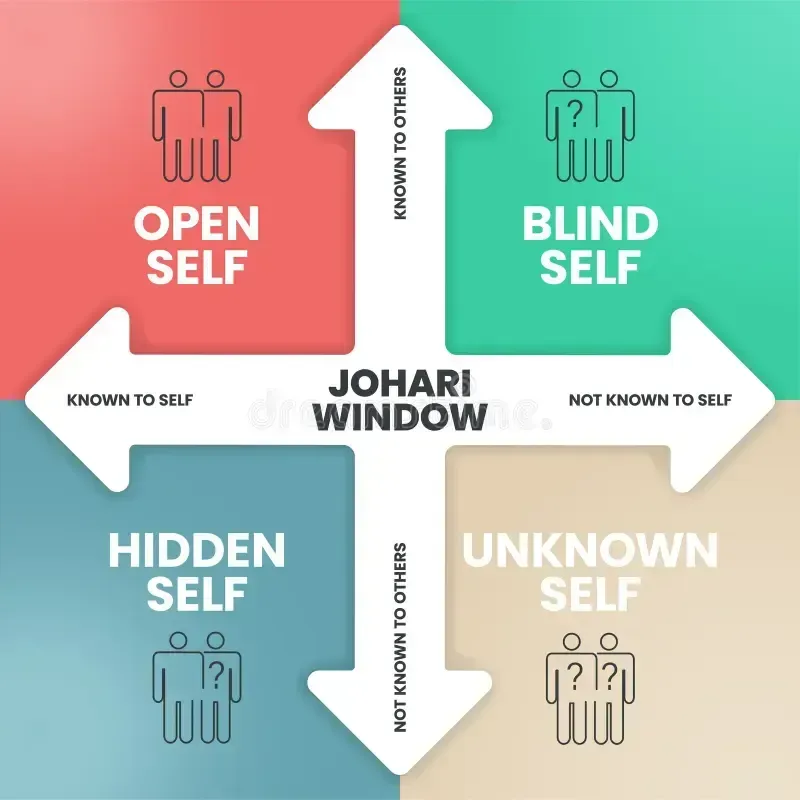
L’altro giorno il cervello fa “ding” e mi connette questa storia con la Finestra di Johari, uno strumento psicologico che aiuta a capire le dinamiche della comunicazione e della percezione di sé. Viene rappresentata come una finestra suddivisa in quattro quadranti:
Area pubblica: Quello che io e gli altri sappiamo di me. Per esempio, se sono bravo a usare Excel, o se ho una buona capacità comunicativa.
Area o punto cieco: Quello che gli altri vedono di me, ma io non so. Tipo quella tendenza ad interrompere, qualche tic nervoso che nessuno mi ha mai detto oppure quella competenza che io ho, ma fa talmente parte di me che non ne sono cosciente.
Area nascosta o privata: Quello che so di me, ma gli altri non conoscono. Le mie paure, i segreti, le ambizioni che tengo nascosti.
Area ignota: il quarto quadrante contiene quello che né io né gli altri sappiamo di me. Qui si nasconde il sorprendente, l’ignoto, il “non so di non sapere”.
Questa è una lettura aderente alla versione originale, immaginata dagli psicologi Joseph Luft e Harry Ingham. Io ho provato ad immaginare la finestra applicata a questo progetto o a un business, come la costruzione di un’applicazione o il lancio di una campagna di marketing. Il quarto quadrante – “non so di non sapere” – può essere fatale. Là si nascondono bug non ancora identificati, bisogni latenti dei clienti o criticità che nessuno ancora ha visto.
Probabilmente c’è nel quarto quadrante qualcosa che L. ed io non abbiamo messo a fuoco perché “non sappiamo di non sapere”: una domanda dei potenziali clienti che loro non hanno espresso e a cui noi non abbiamo dato risposta. O una cosa che non vediamo ora e magari avremmo visto 10 minuti dopo aver iniziato.
E il cervello continua con un altro “ding”: è possibile usare questa tabella come strumento di coaching sia aziendale che personale? Si! Aiuta a espandere l’area pubblica, a scoprire i punti ciechi e a rendere visibili le potenzialità nascoste. È anche un valido fact check: con chi possiamo valutare il 4 quadrante per scoprire cosa non stiamo considerando? Quali rischi siamo troppo bloccati a non voler vedere?
E allora mi sono ripromessa di usare questo schema ogni tanto per guardare dentro il quarto quadrante della mia vita, del lavoro, dei progetti. Potreste provarci anche voi e chiedetevi: cosa c’è ancora là, nascosto? E, soprattutto, lasciate spazio alla curiosità di scoprirlo.
PS La settimana dopo questo ragionamento, scrivo questo articolo e lo leggo al mio compagno N e gli racconto il progetto che abbiamo immaginato: lui mi dice “ma certo! Non avete pensato che….”. A volte, la soluzione è proprio lì, dall'altro lato del divano!
"Thank you, we’ll let you know” and then they disappear. (An ironic reflection with the Johari Window)
Some time ago, L.—a brilliant manager and great conversation partner—and I had a work idea that would combine her skills and mine. We prepared a presentation, carefully thought it through, and even imagined a “test” phase where we wouldn’t ask the first client for any payment, just to better refine the service. When we were ready, we launched. Three presentations, three separate moments, all seemed to go well, all sparked curiosity and interest. They told us, “We’ll think about it and call you back,” and I already imagined success. Then… poof! All three disappeared into thin air, as if they had vanished. Naturally, I wondered: why? What mystery surrounds this “we’ll think about it” disappearance, and why does it feel more like a black hole than reassurance?
The other day, my mind went “ding” and connected this story to the Johari Window, a psychological tool that helps understand the dynamics of communication and self-perception. It is represented as a window divided into four quadrants:
Public area: What I and others know about me. For example, if I am good at using Excel or have good communication skills.
Blind spot: What others see in me, but I don’t know. Like the tendency to interrupt, a nervous tic no one has ever told me about, or a skill I have but which is so much a part of me that I’m not aware of.
Hidden or private area: What I know about myself, but others don’t. My fears, secrets, ambitions that I keep hidden.
Unknown area: The fourth quadrant contains what neither I nor others know about me. Here lies the surprising, the unknown, the “unknown unknowns.”
This interpretation adheres to the original version imagined by psychologists Joseph Luft and Harry Ingham. I tried to imagine the window applied to this project or a business, like building an app or launching a marketing campaign. The fourth quadrant – “unknown unknowns” – can be fatal. There hide bugs not yet identified, latent client needs, or issues that no one has yet spotted.
Probably there is something in the fourth quadrant that L and I didn’t focus on because we “didn’t know we didn’t know”: a question from potential clients they never expressed and to which we gave no answer. Or something we don’t see now and maybe would have seen 10 minutes after starting.
And my brain goes “ding” again: is it possible to use this table as a coaching tool for both companies and individuals? Yes! It helps expand the public area, uncover blind spots, and reveal hidden potential. It’s also a useful way to fact-check: with whom can we assess the fourth quadrant to discover what we’re not considering? What risks are we too stuck to see?
So I promised myself to use this diagram every now and then to look inside the fourth quadrant of my life, work, and projects. You could try it too and ask yourself: what is still hidden there? And, above all, leave room for curiosity to discover it.
PS The week after this reflection, I wrote this article and read it to my partner N, telling him about the project we had imagined: he said, “Of course! You didn't think about….” Sometimes, the solution is right there, just on the other side of the sofa!
Cosa ti fa venire in mente questo post?
YOU MIGHT ALSO LIKE
Ti incuriosiscono i bias cognitivi? Scarica la mia guida gratuita e scopri i piccoli sabotatori delle tue decisioni. Non mi devi neanche lasciare la tua mail, tranquill*
Privacy policy: https://www.iubenda.com/privacy-policy/31240018
Cookie Policy: https://www.iubenda.com/privacy-policy/31240018/cookie-policy
Creato con ©systeme.io