
English version (machine translated) follows below.
Perché nei talk show nessuno cambia mai idea: predicatori, accusatori e politici.
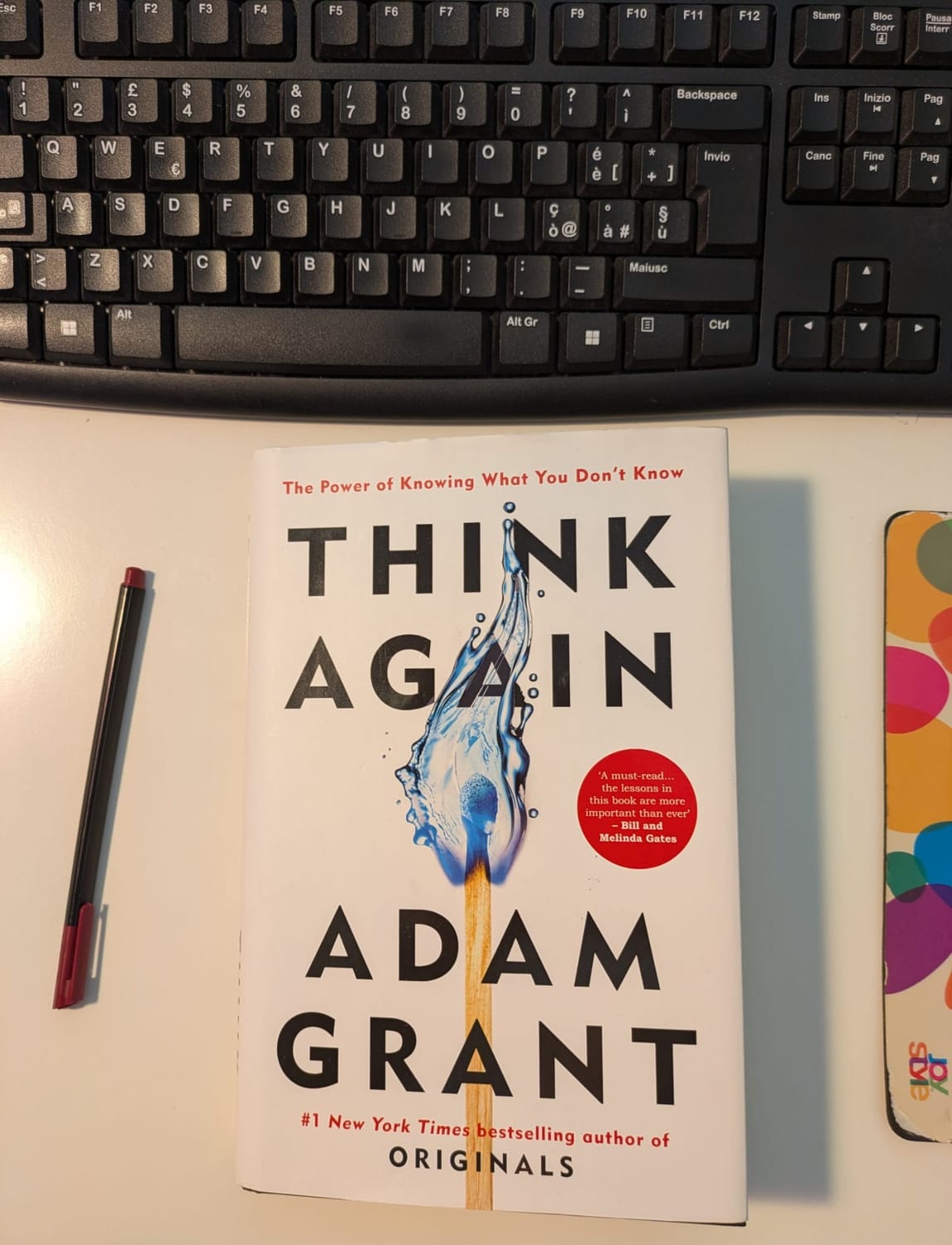
Ho iniziato a leggere “Think Again” di Adam Grant. Link: https://amzn.to/431sNtU
Non sono neanche a metà e già mi ha fatto venire voglia di fermarmi e scrivere. Non perché sia complicato—anzi. Il concetto è disarmante nella sua semplicità: ripensare.
Eppure, se guardiamo come comunichiamo oggi, soprattutto negli spazi pubblici, sembra quasi impossibile. Grant propone una chiave di lettura che, una volta vista, non riesci più a “non vedere”.
Dice che quando pensiamo e parliamo, entriamo spesso in tre modalità: il predicatore, il pubblico ministero e il politico.
E la cosa interessante è che non sono solo metafore. Sono ruoli che interpretiamo continuamente.
Il predicatore emerge quando sentiamo che i nostri valori sono minacciati. In quel momento non stiamo più dialogando: stiamo difendendo qualcosa di sacro. Il tono cambia, diventa assoluto, morale, spesso anche un po’ rigido. Non stiamo cercando verità, stiamo proteggendo identità.
Il pubblico ministero invece entra in scena quando individuiamo un errore nell’altro. E lì parte il processo. Si raccolgono prove, si costruisce una linea accusatoria, si selezionano solo gli elementi che rafforzano la nostra tesi. L’obiettivo non è capire, è vincere.
Infine c’è il politico. Quello più subdolo. Perché qui non si tratta neanche più di avere ragione: si tratta di piacere. Di ottenere consenso. Di dire la cosa giusta nel modo giusto per ottenere approvazione.
Ora, se spostiamo questa lente sulla comunicazione televisiva—soprattutto nei talk show politici italiani—il quadro diventa quasi caricaturale.
Pensa a certi format serali, dove si parla di economia, guerra, sanità, riforme strutturali. Temi complessi, che richiederebbero tempo, profondità, dati, sfumature. E invece cosa succede?
Succede che un ospite entra in modalità predicatore e difende la propria posizione come fosse un dogma. Lo vediamo spesso quando si parla ad esempio di sicurezza: il linguaggio diventa identitario, assoluto, poco disponibile alla complessità.
Pochi minuti dopo, magari un altro ospite (o lo stesso) passa in modalità pubblico ministero e attacca: tira fuori dichiarazioni passate, incongruenze, votazioni contraddittorie. Non per costruire un ragionamento, ma per smontare l’avversario.
E infine arriva la modalità politico: frase breve, slogan efficace, tono calibrato per il pubblico. Non serve approfondire, serve convincere. O almeno sembrare convincenti.
Il risultato? Non si costruisce pensiero - si costruisce spettacolo.
E soprattutto, non si crea uno spazio in cui sia possibile dire: “Aspetta, forse qui siamo d'accordo" (non arriverei a pensare un "mi sto sbagliando.”) Perché in nessuna di queste tre modalità è previsto il dubbio. E senza dubbio, non c’è apprendimento.
E quindi resta una domanda sospesa, un po’ scomoda: è ancora possibile pensare davvero, insieme, oppure siamo condannati a recitare ruoli?
Grant, per fortuna, non si limita alla diagnosi. Propone un’alternativa potente, quasi controintuitiva nella sua semplicità: riappropriarci della capacità di ri-pensare. Ma non nel senso astratto del termine—nel senso concreto, operativo, quasi scientifico. Tornare a verificare, a testare, a chiederci se ciò che ieri ci piaceva, ci serviva, ci nutriva… sia ancora valido oggi. Ed è qui che il discorso smette di essere “là fuori”, nei talk show e nei politici, e diventa personale.
Nel prossimo articolo entriamo proprio lì. Dentro quel punto in cui ripensare non è più un esercizio teorico, ma una scelta che riguarda direttamente chi siamo—oggi.
Why No One Ever Changes Their Mind on Talk Shows: Preachers, Prosecutors, and Politicians
I started reading Think Again by Adam Grant.
I’m not even halfway through, and it already made me stop and write. Not because it’s complicated—quite the opposite. The idea is disarmingly simple: rethink
And yet, if we look at how we communicate today, especially in public spaces, it almost seems impossible. Grant offers a lens that, once you see it, you can’t unsee.
He says that when we think and speak, we often slip into three modes: the preacher, the prosecutor, and the politician.
And the interesting thing is that these are not just metaphors. They are roles we keep playing.
The preacher emerges when we feel that our values are under threat. At that point, we are no longer dialoguing: we are defending something sacred. The tone changes, becomes absolute, moral, often a little rigid. We are not looking for truth; we are protecting identity.
The prosecutor, instead, enters the scene when we spot a mistake in the other person. And that’s when the trial begins. Evidence is gathered, an accusatory line is built, and only the elements that strengthen our case are selected. The goal is not to understand, it is to win.
Finally, there is the politician. The most subtle one. Because here it is no longer even about being right: it is about being liked. About gaining consensus. About saying the right thing in the right way in order to get approval.
Now, if we shift this lens to television communication—especially in Italian political talk shows—the picture becomes almost caricatural.
Think of certain evening formats, where people talk about the economy, war, healthcare, structural reforms. Complex topics that would require time, depth, data, nuance. And what happens instead?
What happens is that a guest enters preacher mode and defends their position as if it were a dogma. We often see this, for example, when security is discussed: the language becomes identity-driven, absolute, unwilling to embrace complexity.
A few minutes later, perhaps another guest (or the same one) switches to prosecutor mode and attacks: pulling out past statements, inconsistencies, contradictory votes. Not to build an argument, but to take the opponent apart.
And finally comes politician mode: short phrase, effective slogan, tone calibrated for the audience. No need to go deeper, just convince. Or at least seem convincing.
The result?
We do not build thought - we build spectacle.
And above all, we do not create a space where it is possible to say: “Wait, maybe we’re agreeing here” (I wouldn’t go as far as thinking “I might be wrong.”) Because none of these three modes allows room for doubt. And without doubt, there is no learning.
And so a suspended, slightly uncomfortable question remains: is it still possible to truly think together, or are we condemned to perform roles?
Grant, fortunately, does not stop at diagnosis. He proposes a powerful, almost counterintuitive alternative in its simplicity: reclaiming the ability to re-think. But not in the abstract sense of the term—in the concrete, operational, almost scientific sense. Going back to checking, testing, asking ourselves whether what pleased us yesterday, served us yesterday, nourished us yesterday... is still valid today. And this is where the conversation stops being “out there,” in talk shows and politicians, and becomes personal.
In the next article, we go right there. Into that point where rethinking is no longer a theoretical exercise, but a choice that directly concerns who we are—today.
Cosa ti fa venire in mente questo post?
YOU MIGHT ALSO LIKE
Ti incuriosiscono i bias cognitivi? Scarica la mia guida gratuita e scopri i piccoli sabotatori delle tue decisioni. Non mi devi neanche lasciare la tua mail, tranquill*
Privacy policy: https://www.iubenda.com/privacy-policy/31240018
Cookie Policy: https://www.iubenda.com/privacy-policy/31240018/cookie-policy
Creato con ©systeme.io