
English version (machine translated) follows below.
Cambiare idea senza perdere se stessi: il potere di ripensarsi
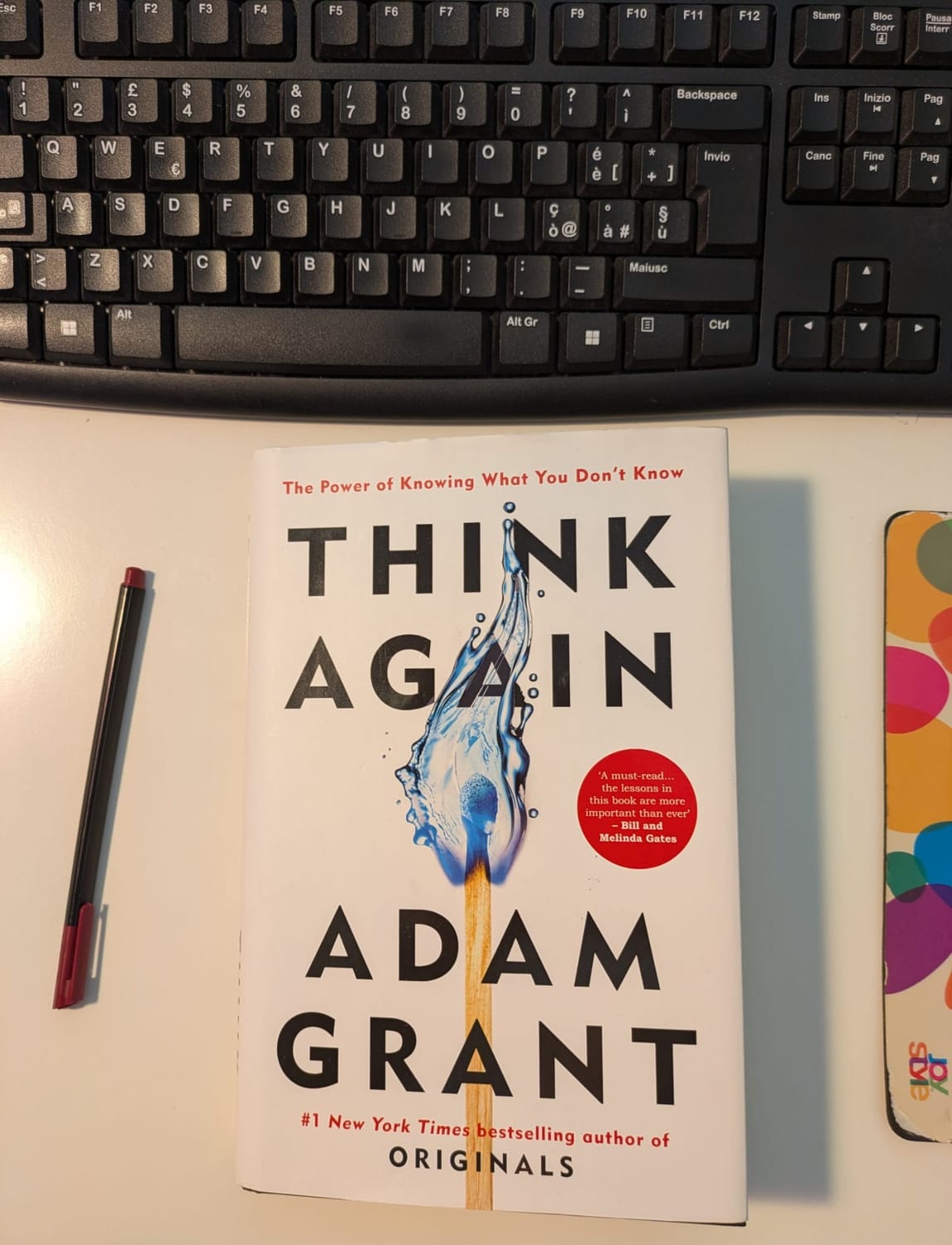
Sempre ispirandomi a “Think Again” di Adam Grant, un pozzo di idee su come “ri-pensare”. Link qui: https://amzn.to/431sNtU
Nell’articolo della settimana precentente (link qui) abbiamo parlato delle tre modalità di pensiero (il predicatore, il pubblico ministero e il politico – nei talk show, social e conversazioni pubbliche). Oggi facciamo entrare questi personaggi in casa. Perché la verità è che quelle tre modalità non sono solo dei personaggi in TV. Sono anche nostre.
Grant propone un’alternativa potente: usare un pensiero scientifico, pensare come uno scienziato.
Che non significa essere freddi o distaccati. Significa essere attivamente aperti. Cercare le ragioni per cui potremmo avere torto, invece di collezionare prove per dimostrare che abbiamo ragione. E soprattutto, aggiornare le nostre idee in base a ciò che scopriamo – cosa che potremo definire (usando parole in voga) crescita personale.
Tradotto: smettere di essere fedeli alle nostre opinioni e iniziare a essere fedeli alla realtà. Nel coaching, questo è un punto delicatissimo.
Perché le persone non restano bloccate per mancanza di intelligenza o capacità. Restano bloccate spesso per attaccamento. Attaccamento a chi erano, alle scelte fatte, ad un’identità forzatamente coerente, alla vecchia versione di sé - che magari non le rappresenta piu’. Grant lo chiama chiaramente: attachment. Ed è ciò che ci impedisce di dire: “Ok, questa cosa non è più vera per me.”
Per sciogliere questo nodo, propone due movimenti che sono molto vicini al lavoro che si fa nel coaching.
Il primo è separare il presente dal passato. Non sei più la persona che eri nel 2019, né quella del 2025. Eppure, continui a portare avanti obiettivi, relazioni, aspettative che appartenevano a quella versione di te. Ripensarti significa aggiornarti – e (attenzione) non significa per forza buttare tutto all’aria. A volte basta pochissimo per aggiornare la nostra vita alle nuove necessità. A volte viene in modo naturale, automatico, a volte bisogna deciderlo. Una sorta di aggiornamento di sistema, una release 2026.
Il secondo è un passaggio ancora piu’ sottile: vedere la differenza fra i fatti e le opinioni. Perché molto spesso ciò che difendiamo non è la realtà, ma l’interpretazione che ne abbiamo costruito. Confondiamo ciò che è accaduto con il significato che gli abbiamo dato.
Separare i fatti dalle opinioni permette di creare spazio. Spazio per vedere alternative, per generare nuove letture, per uscire dalla rigidità del “è così” e entrare nel “potrebbe essere anche diversamente”.
Ed è proprio in quello spazio che diventa possibile ripensarsi davvero. Non per “la versione di te” che doveva dimostrare qualcosa. Non per “la versione di te” che ha fatto quelle scelte anni fa. Ma per la te che sei adesso. Perché la coerenza non è una gabbia da rispettare per sempre, ma un allineamento dinamico con ciò che è vero per te oggi.
E qui arriva la parte più adulta del processo. Perché non sempre possiamo vivere pienamente allineati ai nostri valori. Ci sono contesti, vincoli, responsabilità reali. Ma se hai chiarezza della direzione, cambia tutto. Perché a quel punto non subisci più i compromessi - li scegli.
E scegliere consapevolmente i compromessi è una forma di libertà molto più concreta di quanto sembri.
Ripensarsi, alla fine, non è cambiare idea. È smettere di vivere in automatico. E iniziare a vivere per scelta.
Changing Your Mind Without Losing Yourself: The Power of Rethinking
Still inspired by Adam Grant’s Think Again, a true well of ideas on how to rethink.
In last week’s article (link here) , we explored three thinking modes (the preacher, the prosecutor, and the politician—very visible in talk shows, social media, and public conversations). Today, we bring them home. Because the truth is, those modes aren’t just out there. They live inside us too.
Grant offers a powerful alternative: adopt a scientific mindset—think like a scientist.
This doesn’t mean being cold or detached. It means being actively open. Looking for reasons why you might be wrong instead of collecting evidence to prove you’re right. And most importantly, updating your beliefs based on what you discover—what we often call personal growth.
In simple terms: stop being loyal to your opinions and start being loyal to reality. In coaching, this is a delicate point.
People don’t stay stuck because they lack intelligence or ability. They often stay stuck because of attachment. Attachment to who they were, to past decisions, to a forced sense of consistency, to an outdated version of themselves that may no longer fit. Grant calls it clearly: attachment. And it’s what stops us from saying, “Okay, this is no longer true for me.”
To loosen this knot, he suggests two moves—very close to coaching work.
The first is separating the present from the past. You’re not the same person you were in 2019, or even in 2025. Yet you might still be carrying goals, relationships, and expectations from that version of you. Rethinking yourself means updating—not necessarily starting from scratch. Sometimes it takes very little to realign your life with your current needs. Sometimes it happens naturally, sometimes you have to choose it. Think of it as a system update: version 2026.
The second move is subtler: distinguishing facts from opinions. Because what we often defend isn’t reality, but the interpretation we’ve built around it. We confuse what happened with the meaning we gave it.
Separating facts from opinions creates space. Space to see alternatives, generate new perspectives, and move from “this is how it is” to “it could be different.”
And it’s in that space that real change becomes possible. Not for the version of you that had something to prove. Not for the one who made those choices years ago. But for who you are now.
Because consistency isn’t a cage—it’s a dynamic alignment with what’s true for you today.
And here comes the most mature part of the process. We can’t always live fully aligned with our values. There are constraints, responsibilities, real-world limits. But when you’re clear about your direction, everything shifts. You stop enduring compromises—you start choosing them.
And choosing your compromises consciously is a much more tangible form of freedom than it seems.
In the end, rethinking yourself isn’t just about changing your mind. It’s about stepping out of autopilot—and starting to live by choice.
Cosa ti fa venire in mente questo post?
YOU MIGHT ALSO LIKE
Ti incuriosiscono i bias cognitivi? Scarica la mia guida gratuita e scopri i piccoli sabotatori delle tue decisioni. Non mi devi neanche lasciare la tua mail, tranquill*
Privacy policy: https://www.iubenda.com/privacy-policy/31240018
Cookie Policy: https://www.iubenda.com/privacy-policy/31240018/cookie-policy
Creato con ©systeme.io